Conduct, culture & risk

Written by Graham Browning · 11 May 2026
How do people feel around you?
It’s Mental Health Awareness Week, so there will be a lot of discussion about policies, resources, and good habits.
But in my experience — having worked both at the sharp end of serious wellbeing situations and on the preventative side trying to build healthier workplaces — a great deal of the impact on people’s health happens at a different level: the day-to-day moments between two people.
A supervisor who does not create avoidable stress.
A colleague who has your back.
A hello in the corridor.
A check-in that says, without saying it directly: I genuinely care.
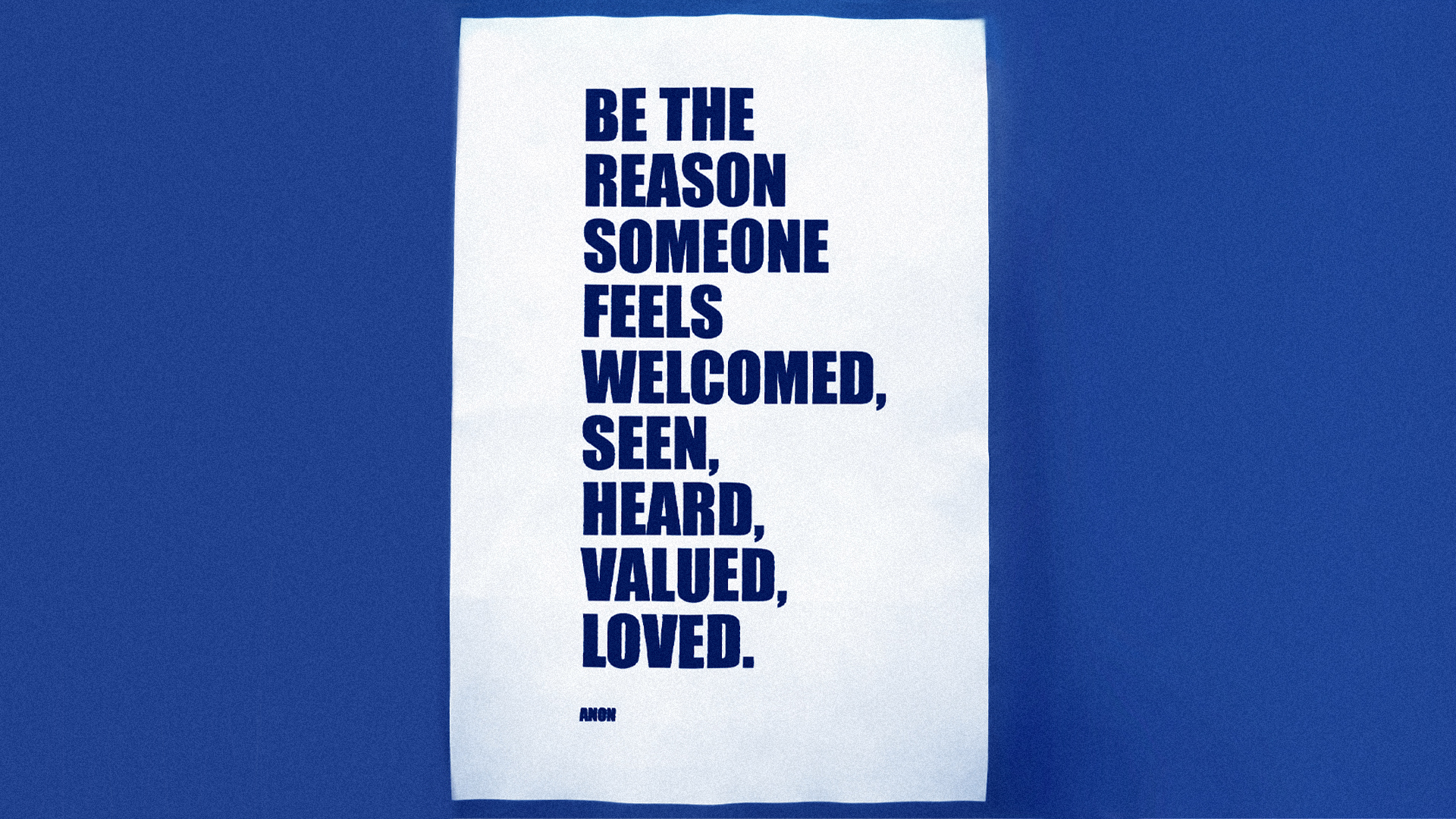
This is on the wall of the hall where I help run a youth club:
Be the reason someone feels welcomed, seen, heard, valued, loved.
Sadly, in too many workplaces — including some law firms and workplace consultancies — the opposite experience is common.
Those cultures reward never causing a problem, even if that means suffering in silence. Struggle gets hidden behind a professional mask that can become very difficult to take off, even when you need help.
People learn early whether showing personal or professional vulnerability is career-limiting.
So often the mask stays on.
You don't have to be far into your career before one thing becomes clear: the people around us day-to-day affect our mental health far more than any policy document or buzzy initiative does.
Not that strategy isn't important. Chronic overwork, teflon toxic 'stars' and 24/7/365 availability demands create conditions that no wellbeing initiative will ever compensate for.
But even within those environments, individual behaviour still matters enormously.
The question is not just whether support exists, or even whether it is trustworthy.
It is: how do people feel around you?
Do people feel safer, calmer, more valued, more able to speak honestly?
Or more anxious, demotivated, put down, guarded or alone?
You do not need professional training to make a meaningful difference. You do not even need to be employed. You just have to be willing to play your part.
Most of it comes down to small choices:
- responding to “I’m fine” with genuine curiosity
- listening without immediately trying to fix
- handling personal disclosures carefully
- not minimising or catastrophising
- showing enough humanity that people do not feel at risk for struggling
None of this is complicated, but it does require attention.
And it requires people to see protecting mental health not simply as HR’s job or “the firm’s responsibility”, but as something shaped every day through behaviour, relationships and culture.
A useful question this week might simply be: “I am the reason people feel…”
How would you honestly finish that sentence?
Because most people can recall very little about the policies where they work.
But everyone remembers how the people around them made them feel — which includes all of us.
And if you are struggling yourself, please speak to someone you trust, or to a professional if that is what you need.